
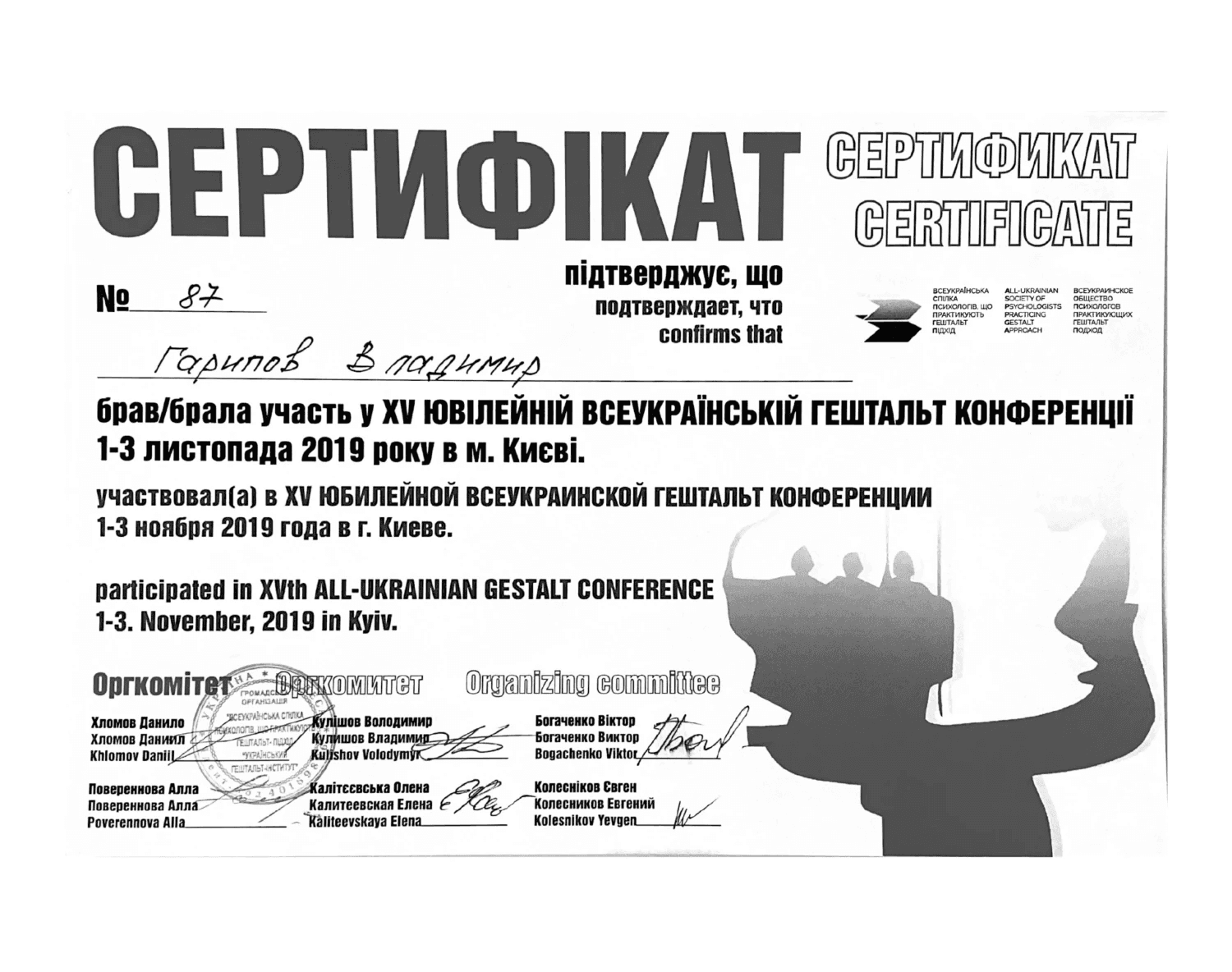
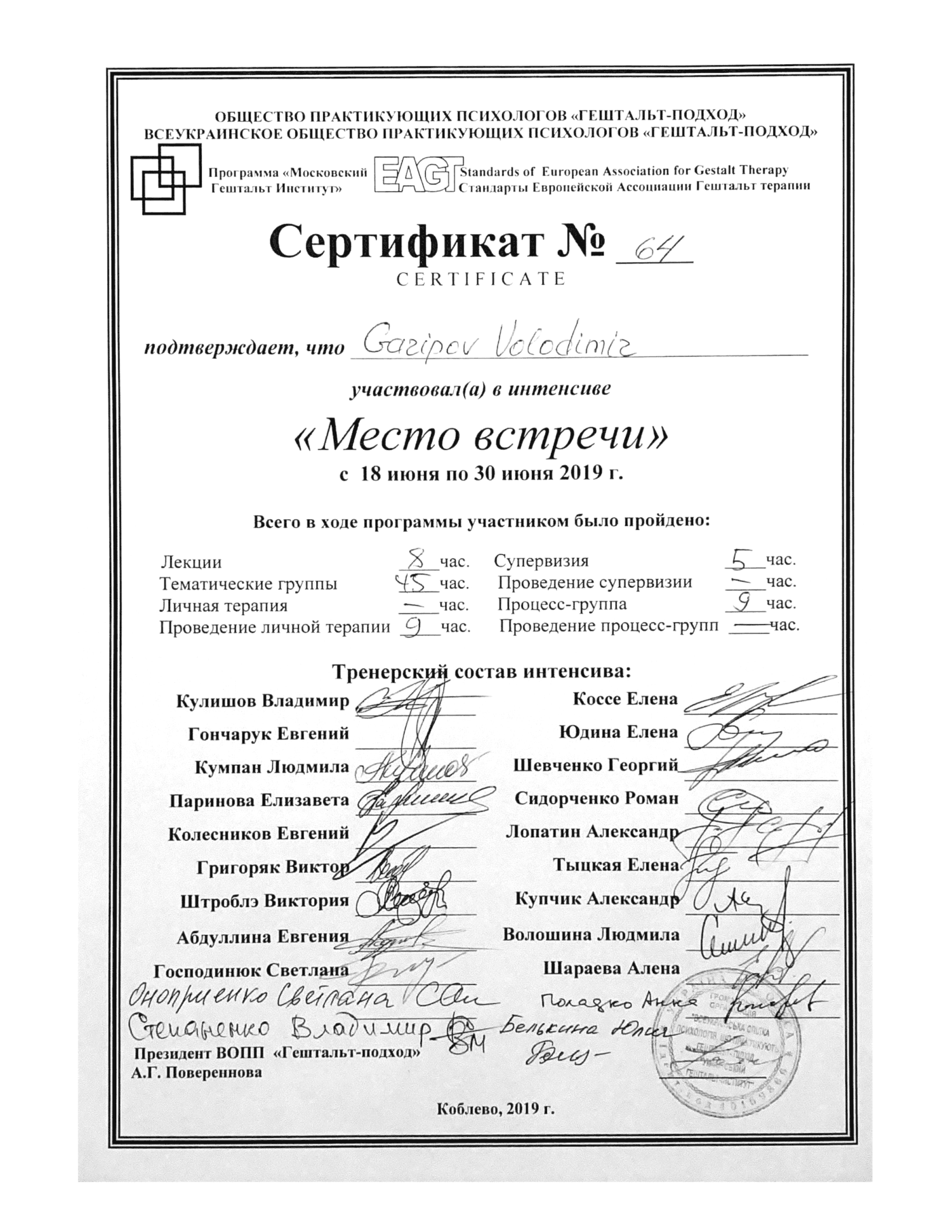
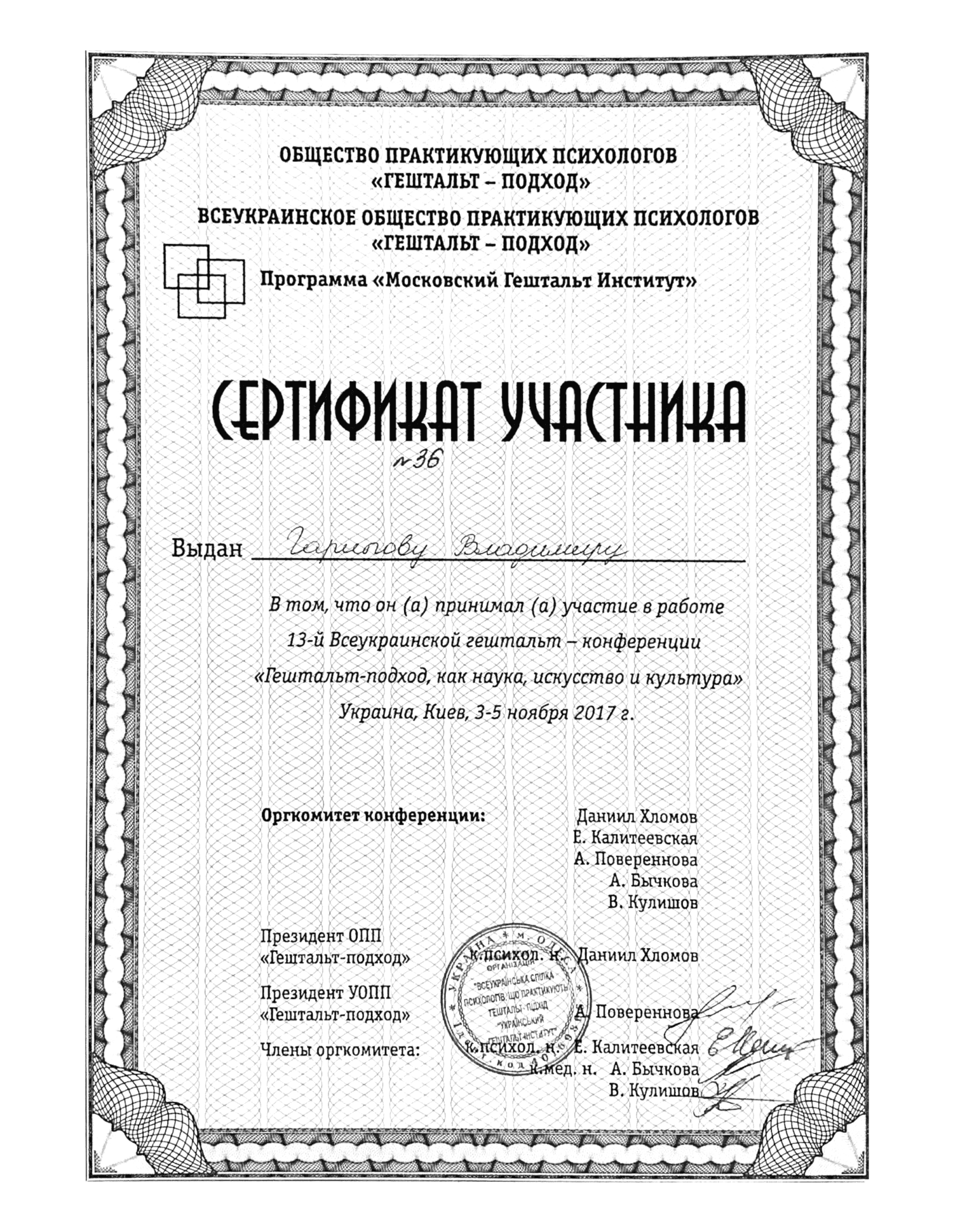
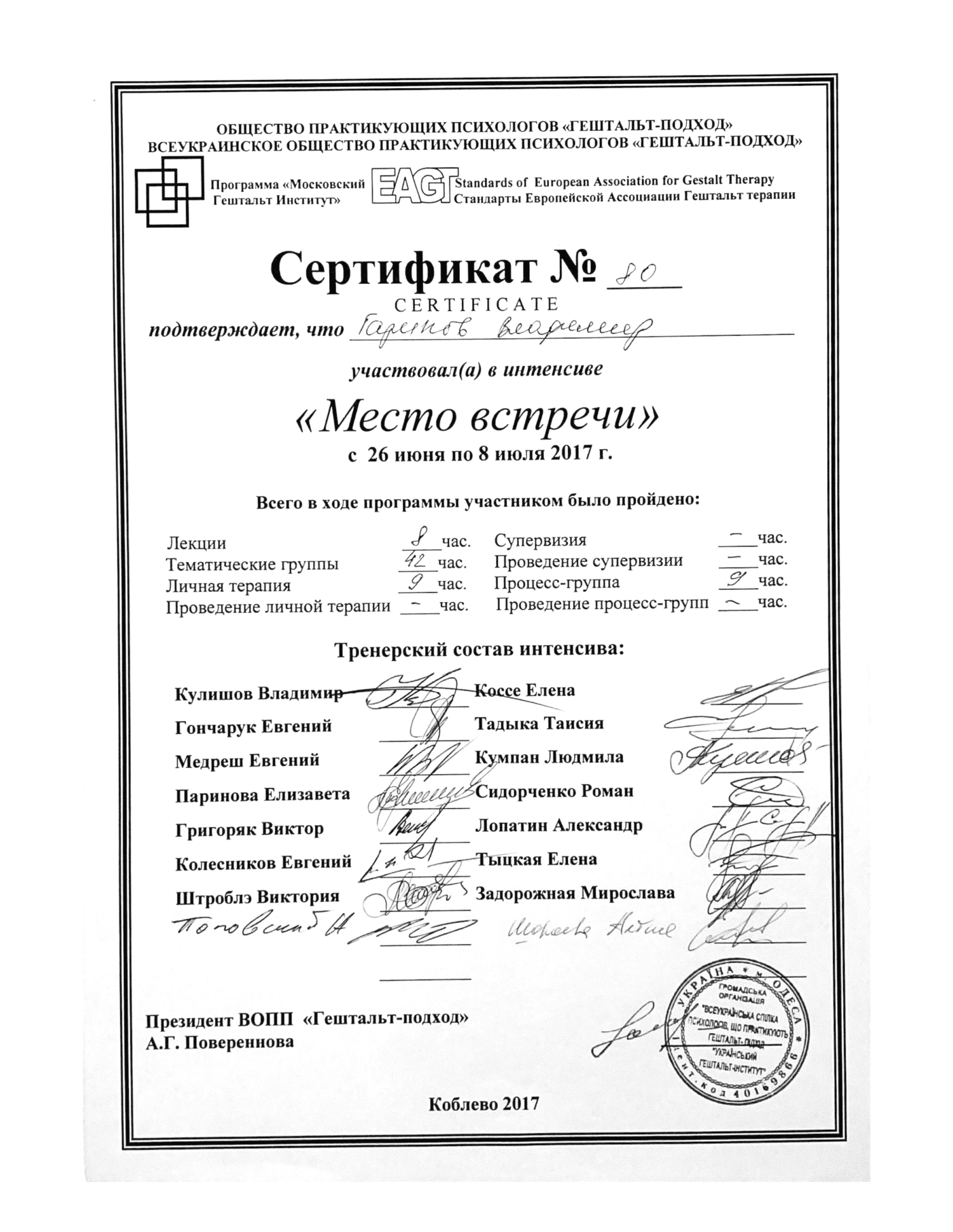
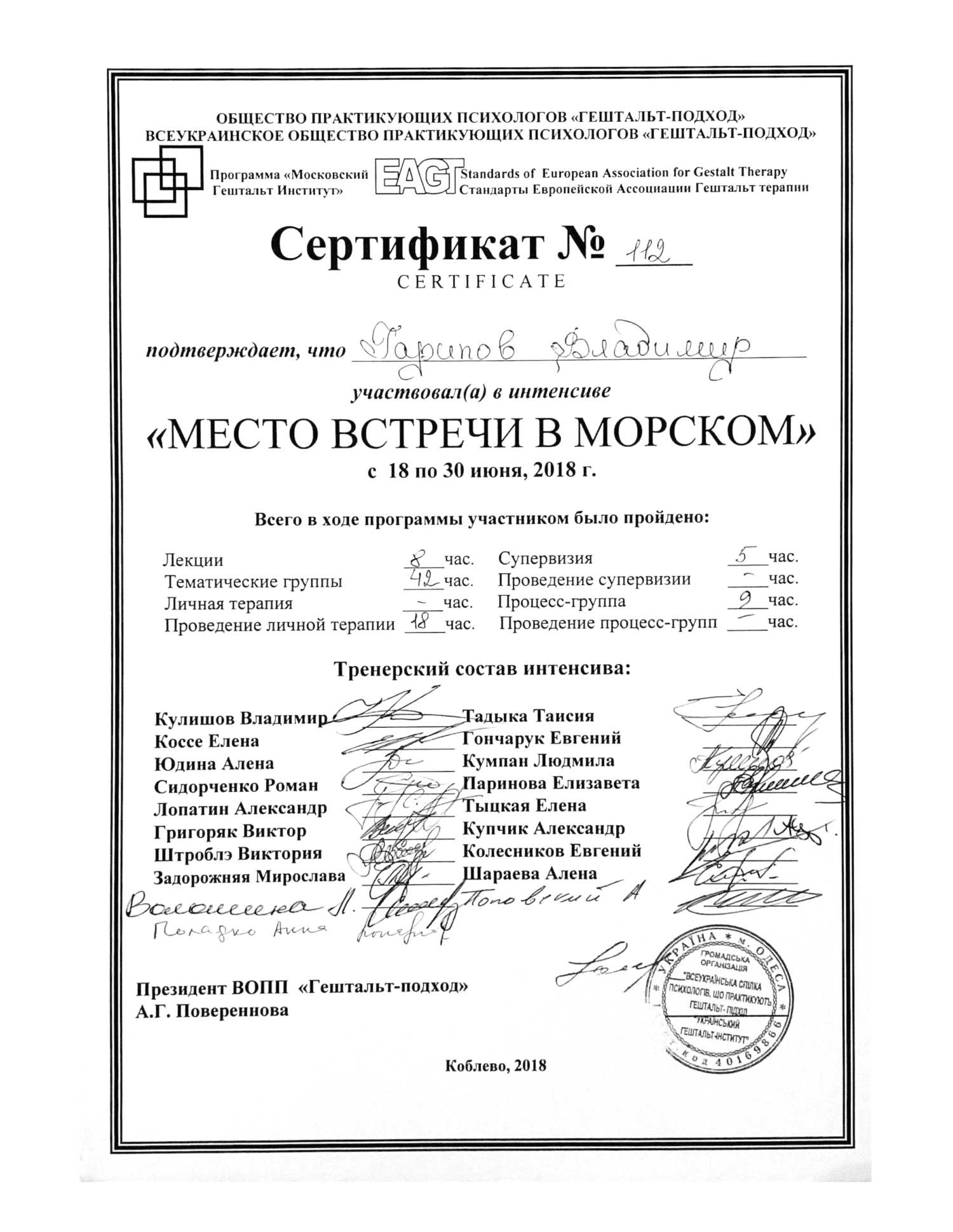
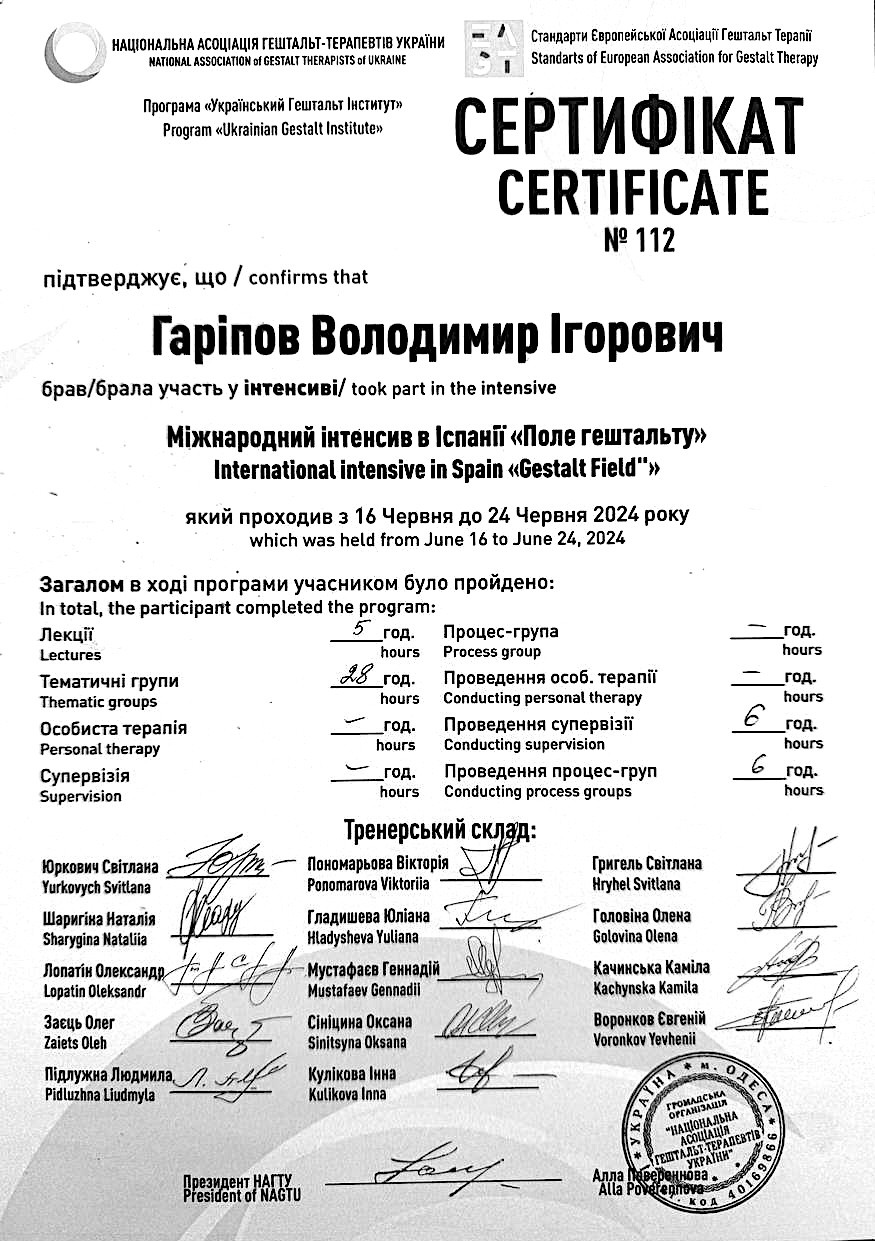
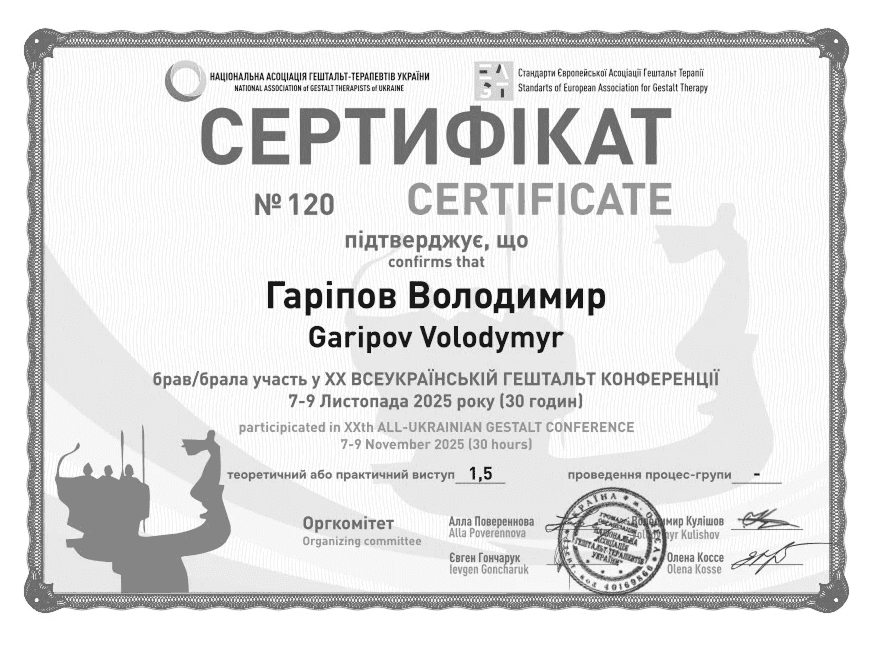
My professional career in psychology spans more than 10 years of study, practice, and specialization in several approaches. During this time, I have been constantly expanding my knowledge and improving my working methods, which allows me to better understand my clients' needs and select the most appropriate methods of work. Being a member of a professional community allows me to regularly exchange experiences with colleagues.
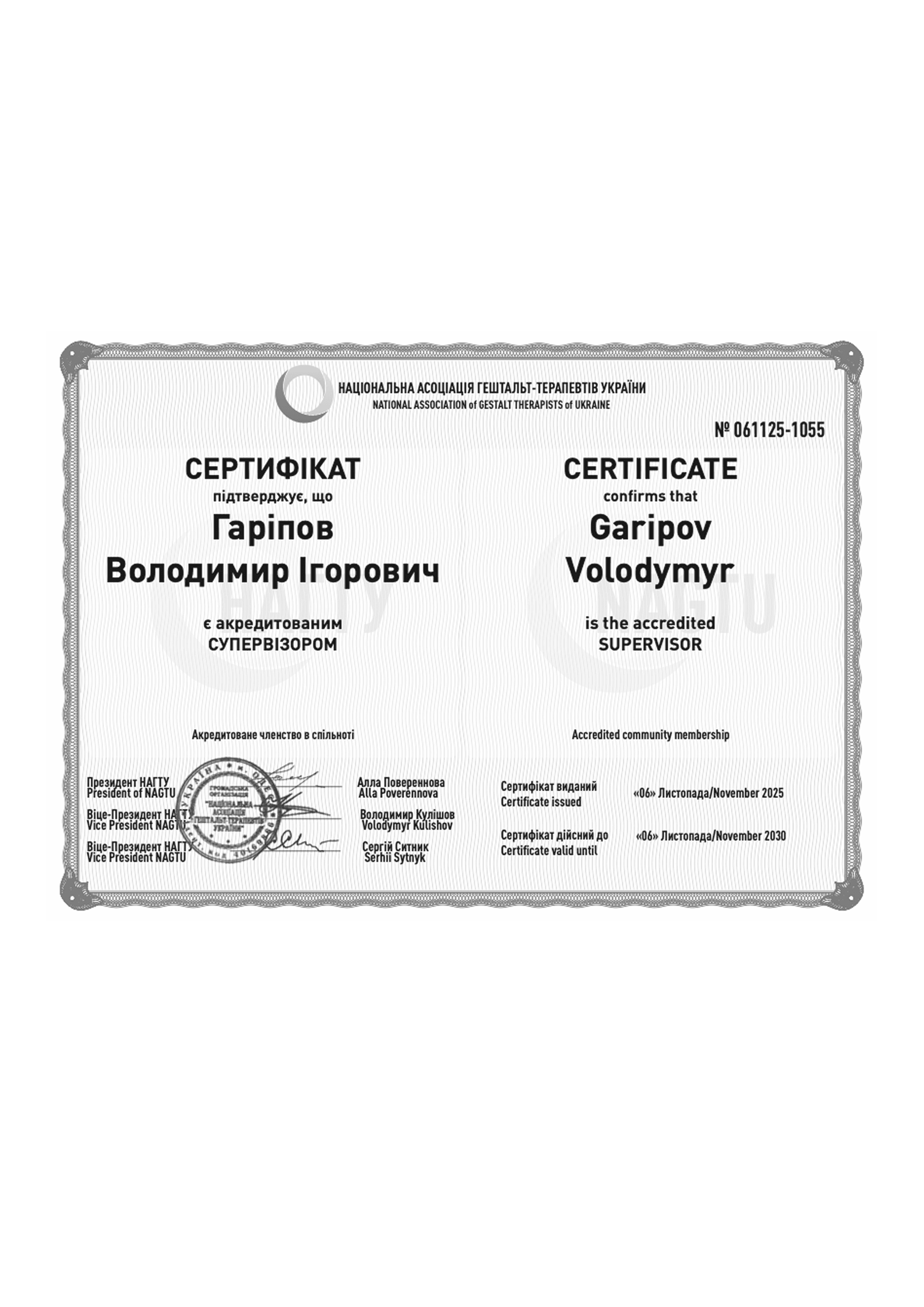
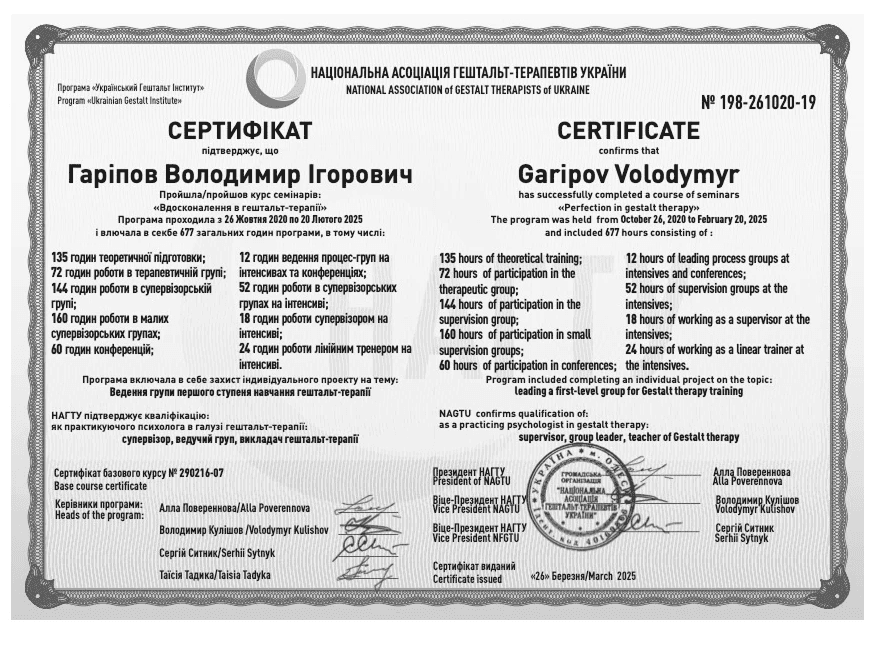
- Accredited supervisor of the National Association of Gestalt Therapists of Ukraine (NAGTU).
- Certified supervisor, therapeutic group leader, and Gestalt therapy instructor – NAGTU.
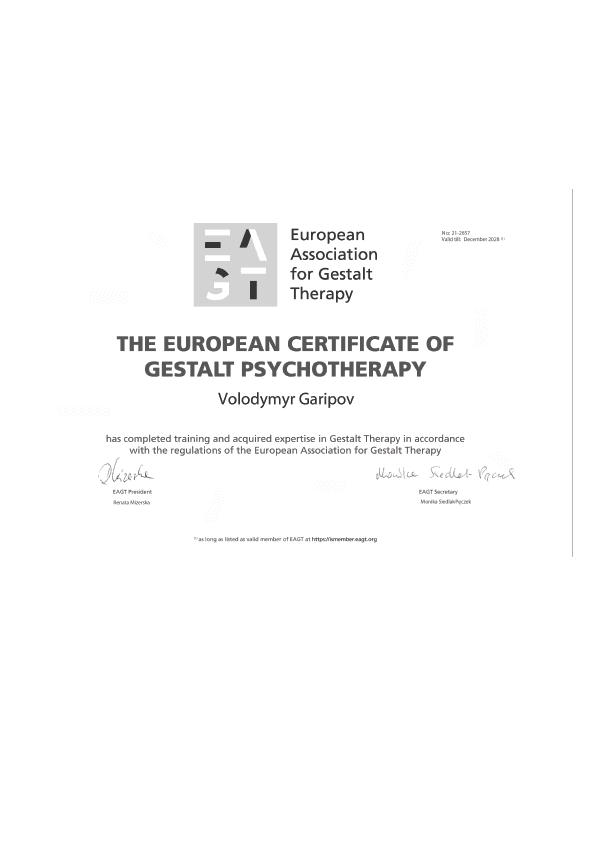
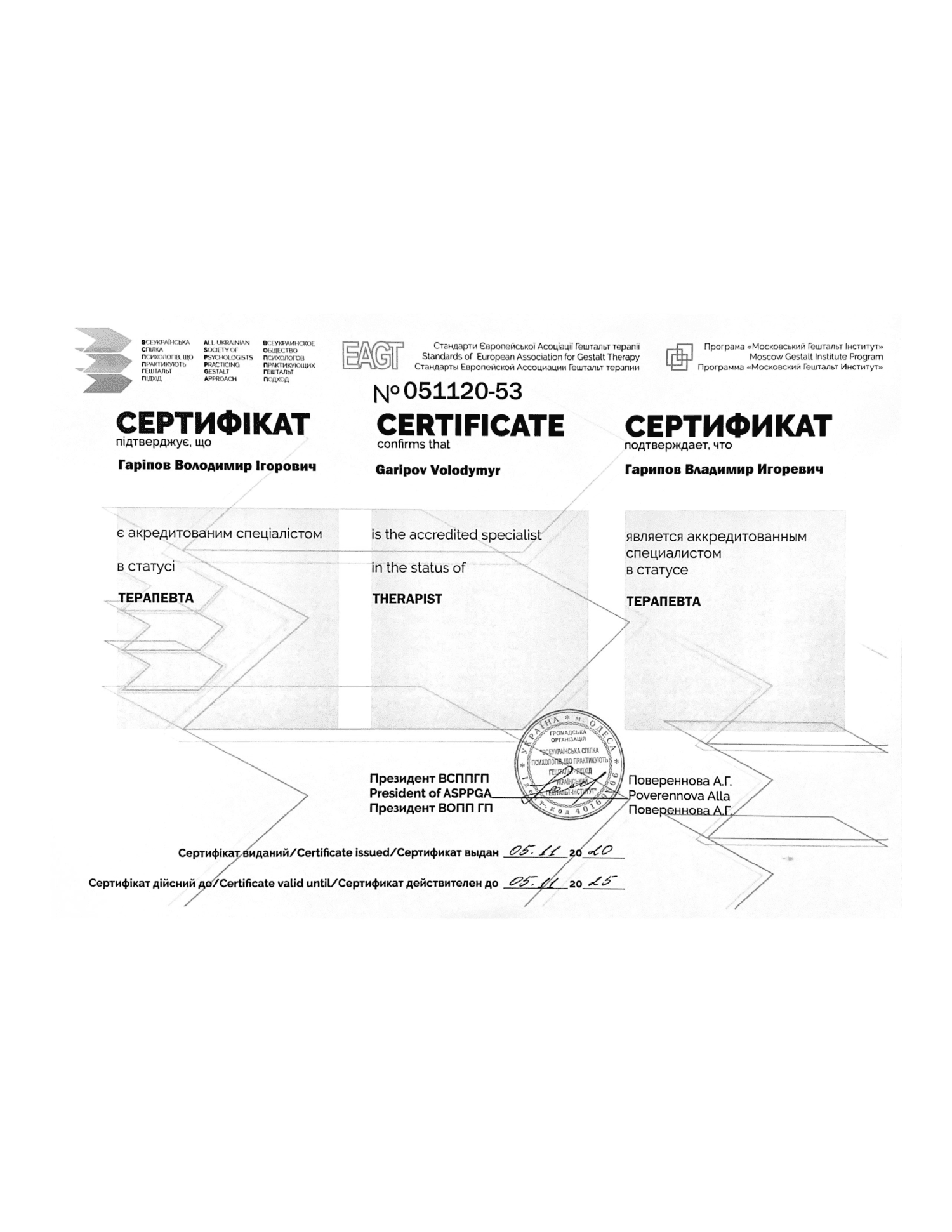
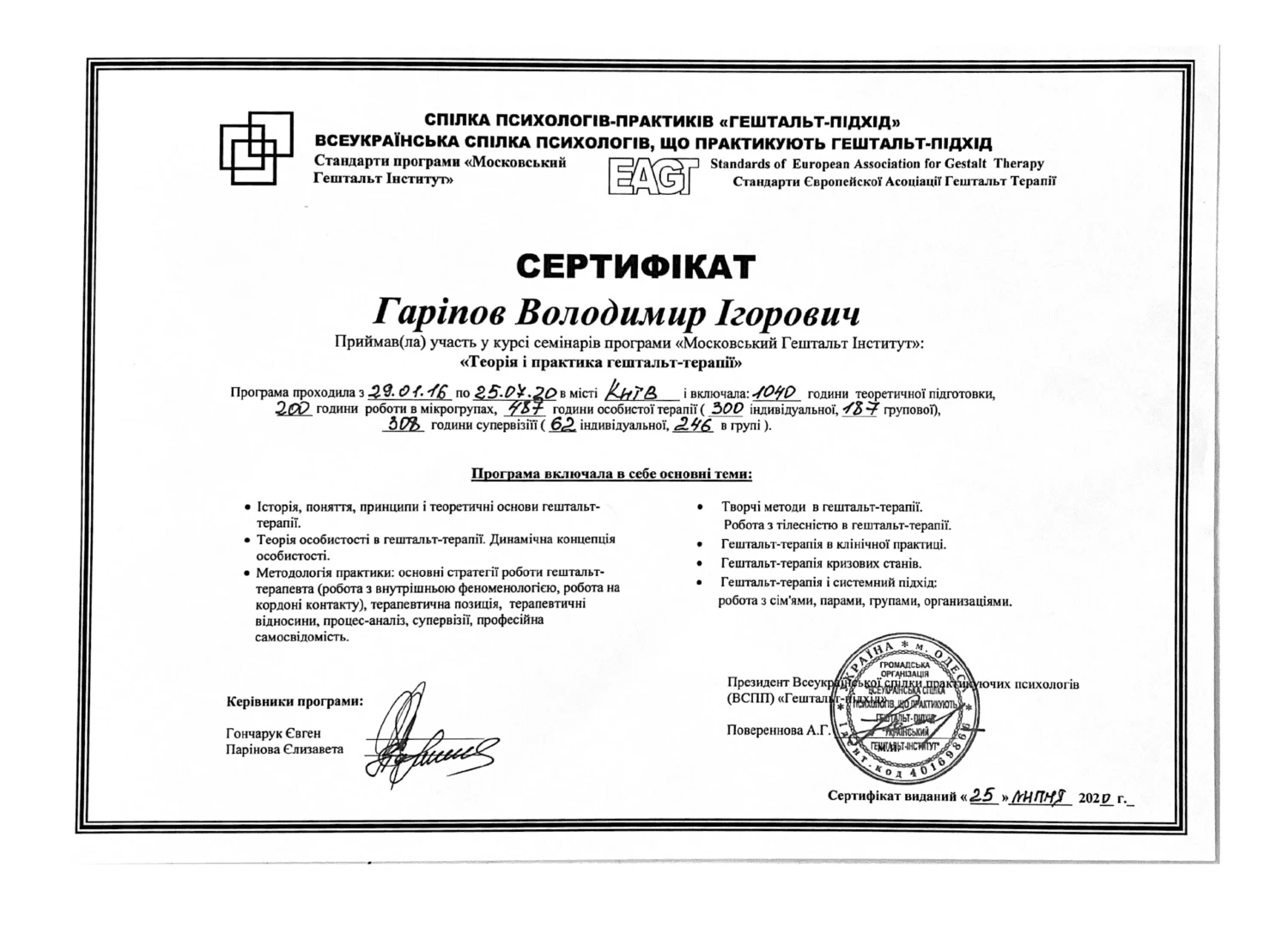
- Accredited Gestalt therapist – European Association for Gestalt Therapy (EAGT) and National Association of Gestalt Therapists of Ukraine (NAGTU).
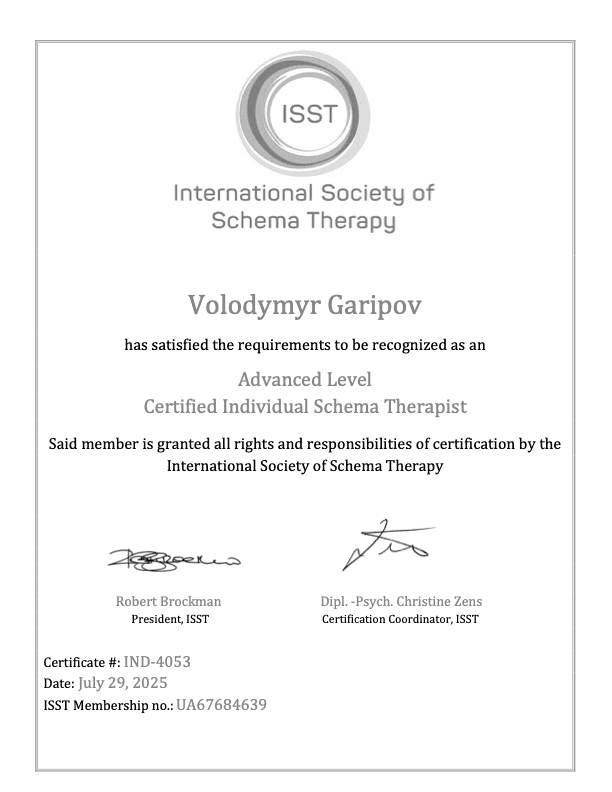
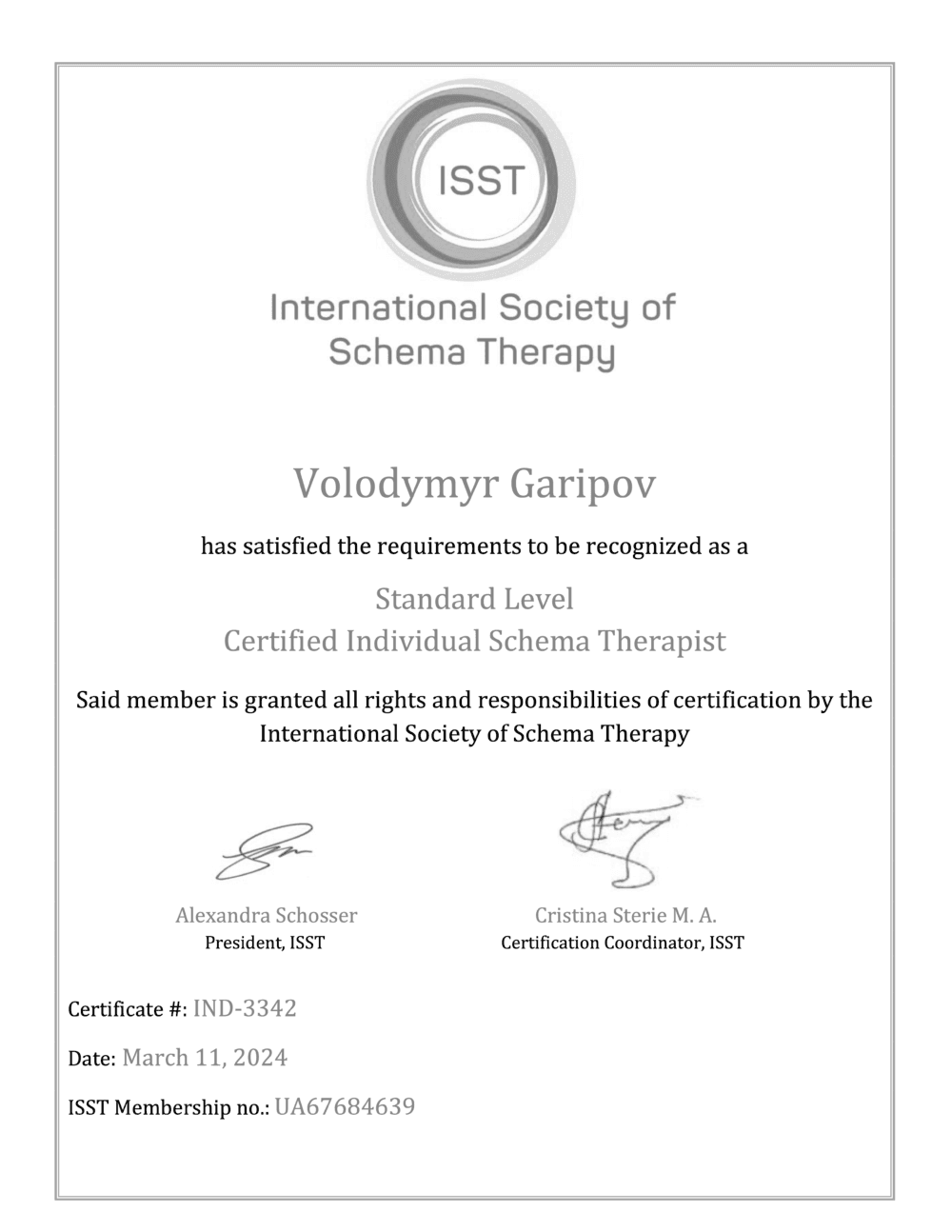
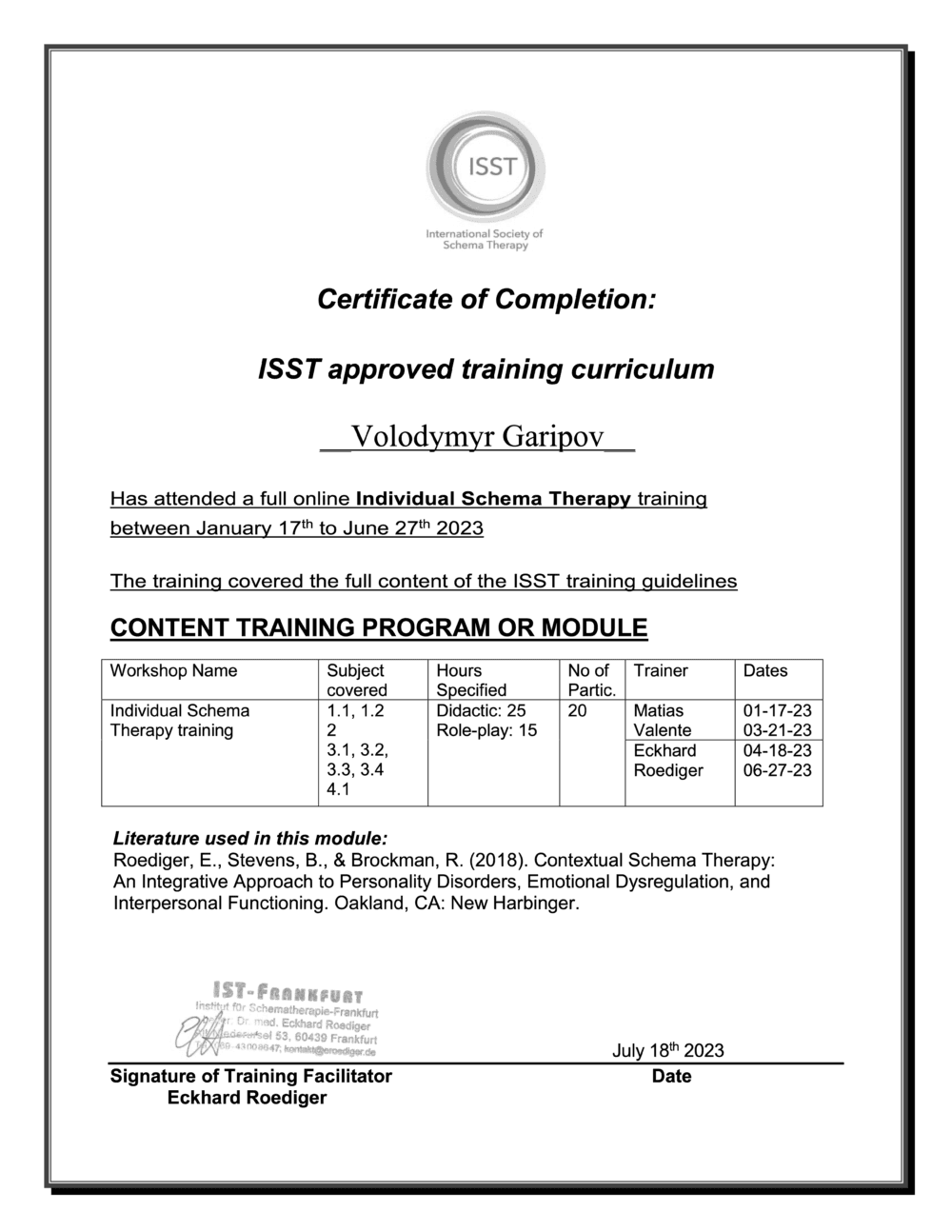
- Certified schema therapist (Advanced Level) at the International Society of Schema Therapy (Bad Vilbel, Germany), accredited therapist ISST.
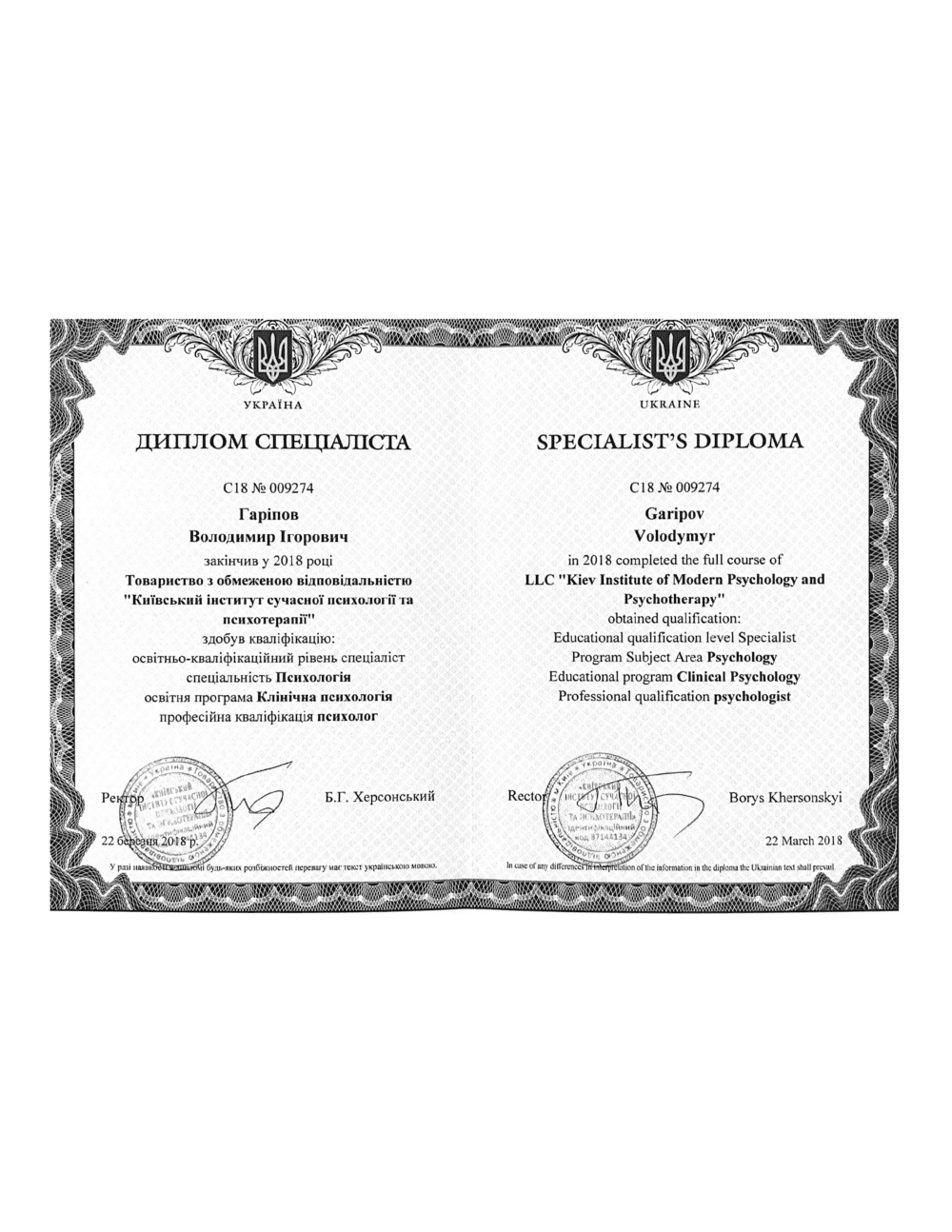
- Clinical psychologist – Kyiv Institute of Modern Psychology and Psychotherapy.
[ Years of study and practice ]
0
0
- Degree in Clinical Psychology – Kyiv Institute of Modern Psychology and Psychotherapy. Diploma No. C18№009274.
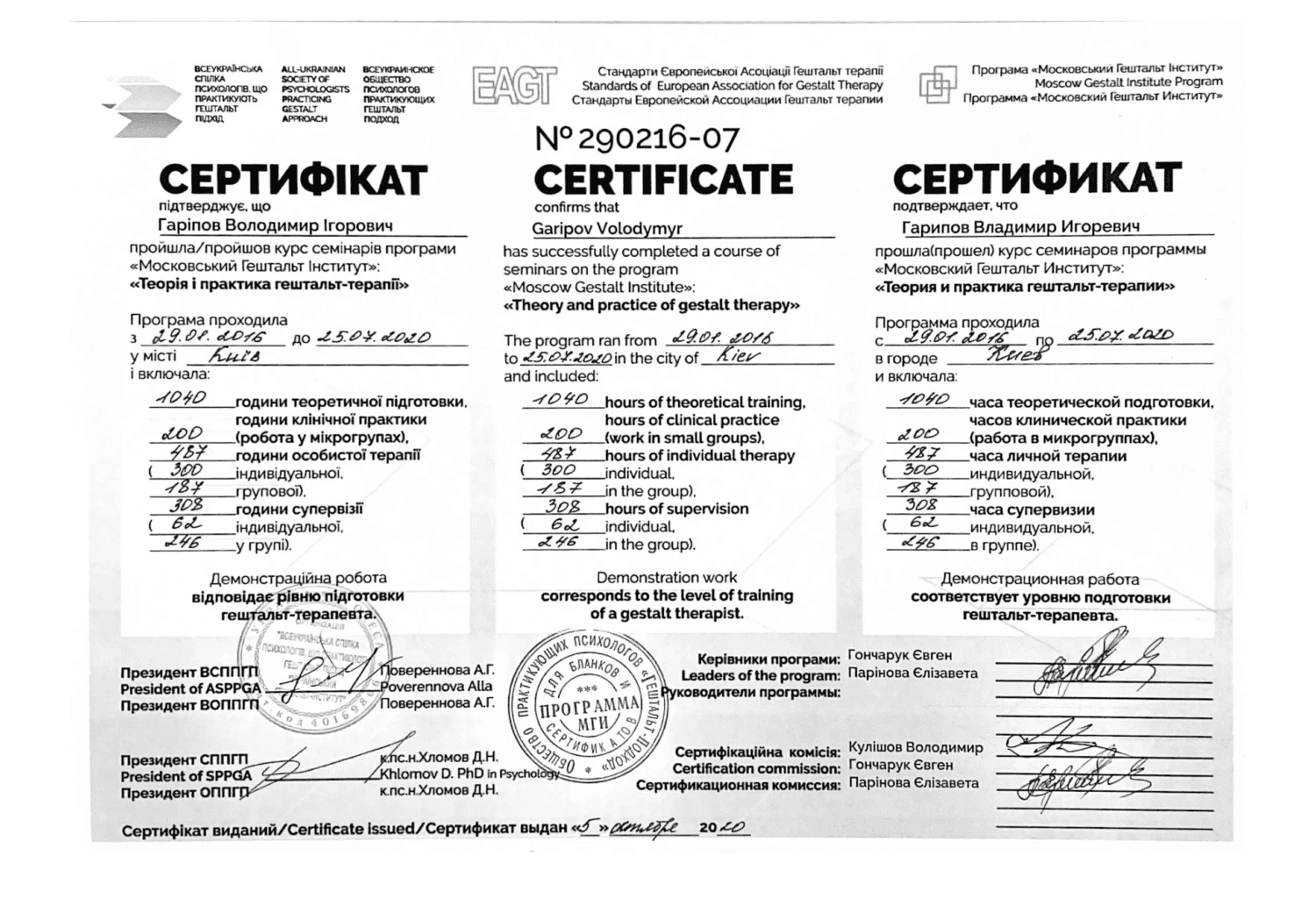
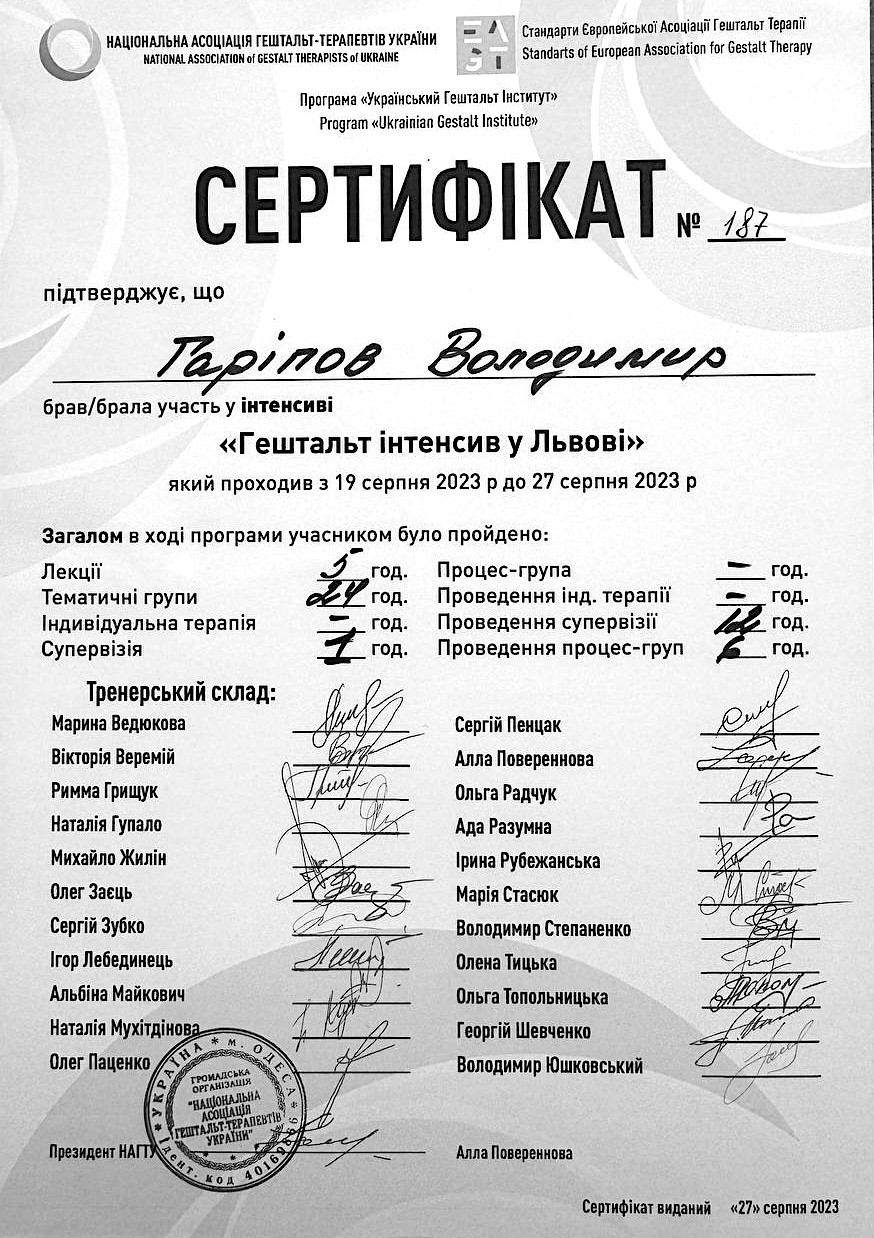
- Level III - Gestalt therapy – at the Ukrainian Gestalt Institute NGO.
- Levels I and II - Gestalt therapy – at the Ukrainian Gestalt Institute NGO.
- Schema therapy – training at the International Society of Schema Therapy (Bad Vilbel, Germany), ISST accredited therapist. Certificate No. IND-3342
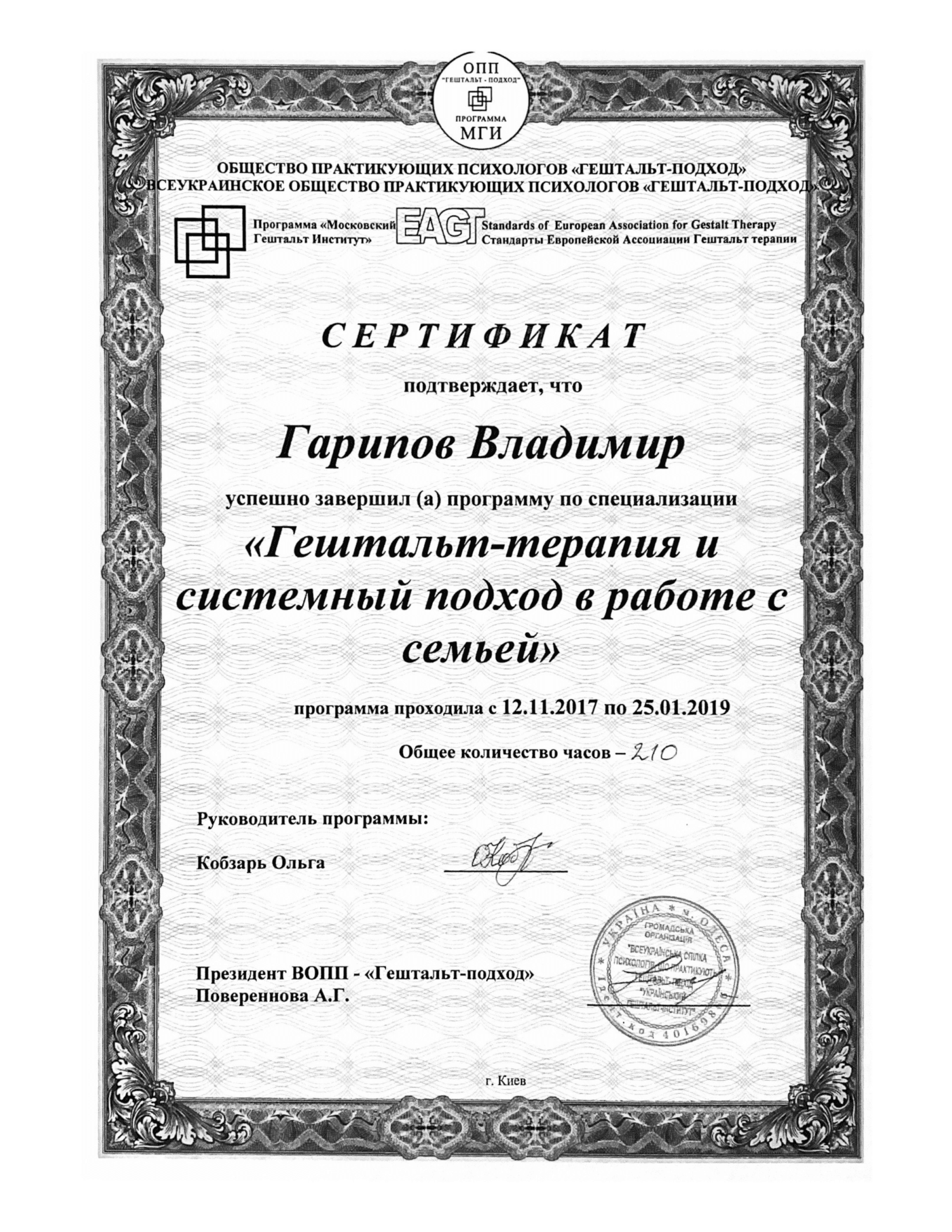
- Specialization in “Family Systems in Gestalt Therapy” – NGO NAGTU “Ukrainian Gestalt Institute.”
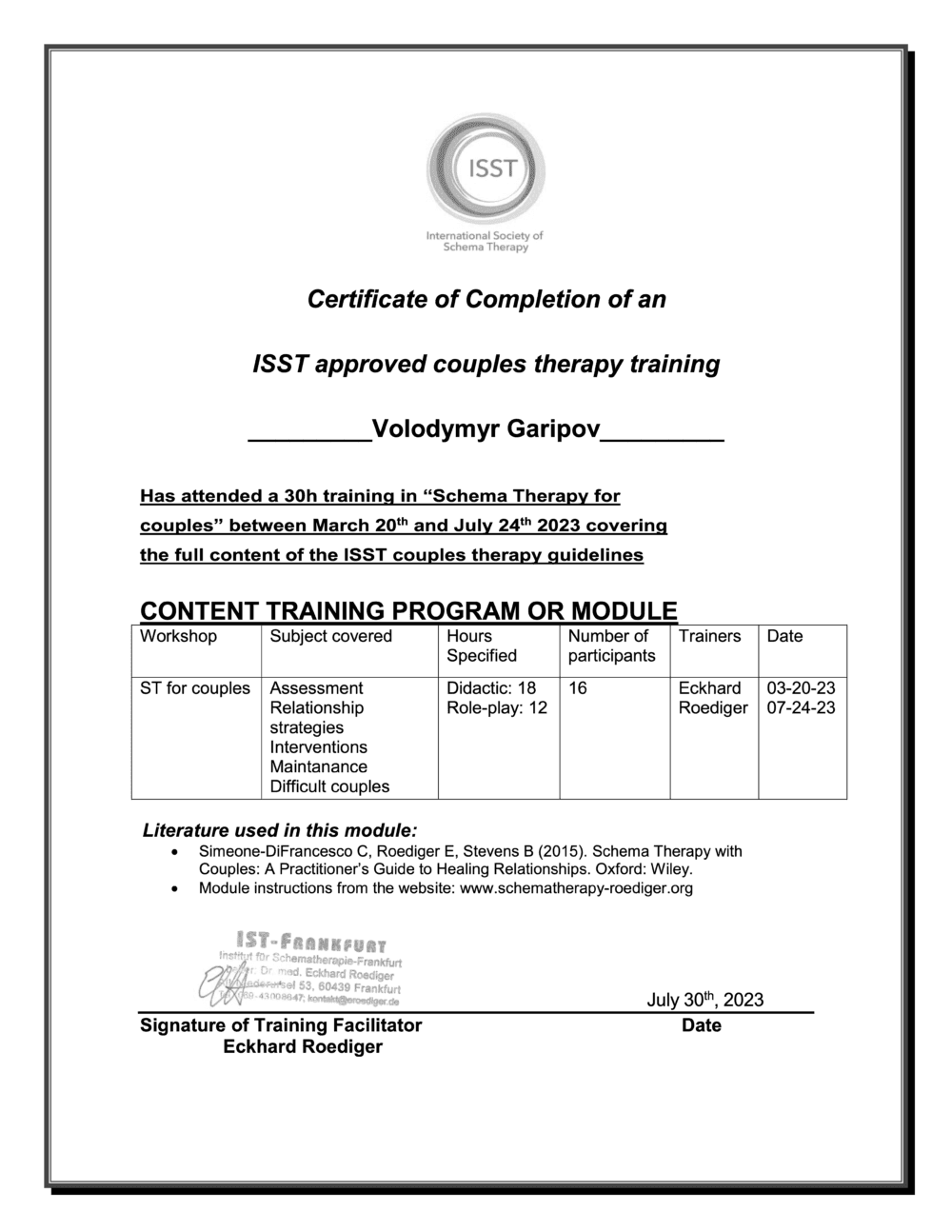
- Specialization in “Working with Couples in Schema Therapy” – International Society of Schema Therapy (ISST).
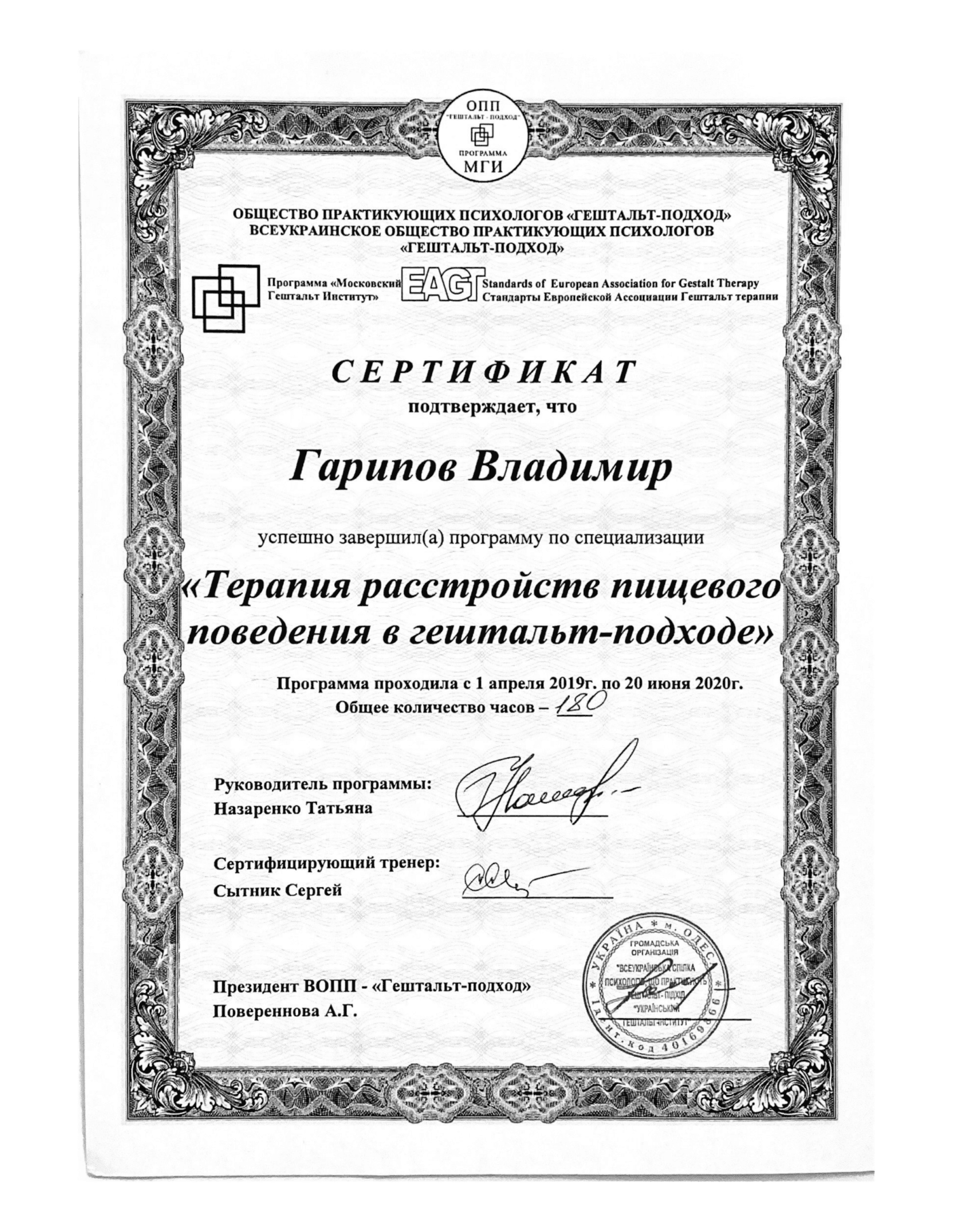
- Specialization in “Working with Eating Disorders in Gestalt Therapy” – NGO NAGTU “Ukrainian Gestalt Institute”.
Training in various therapeutic approaches has allowed me to integrate in-depth knowledge of Gestalt therapy and schema therapy, which expands the possibilities of working with clients.
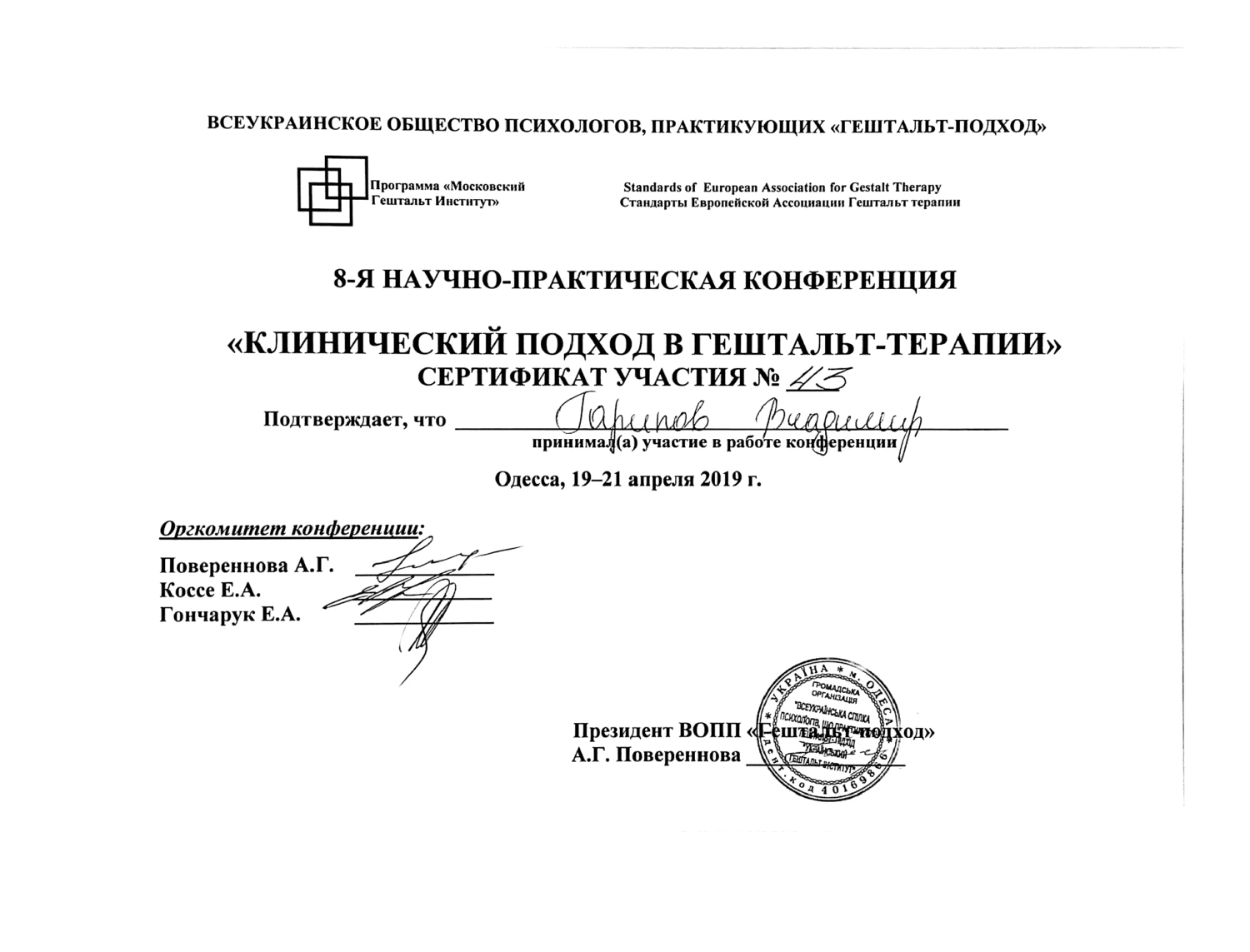
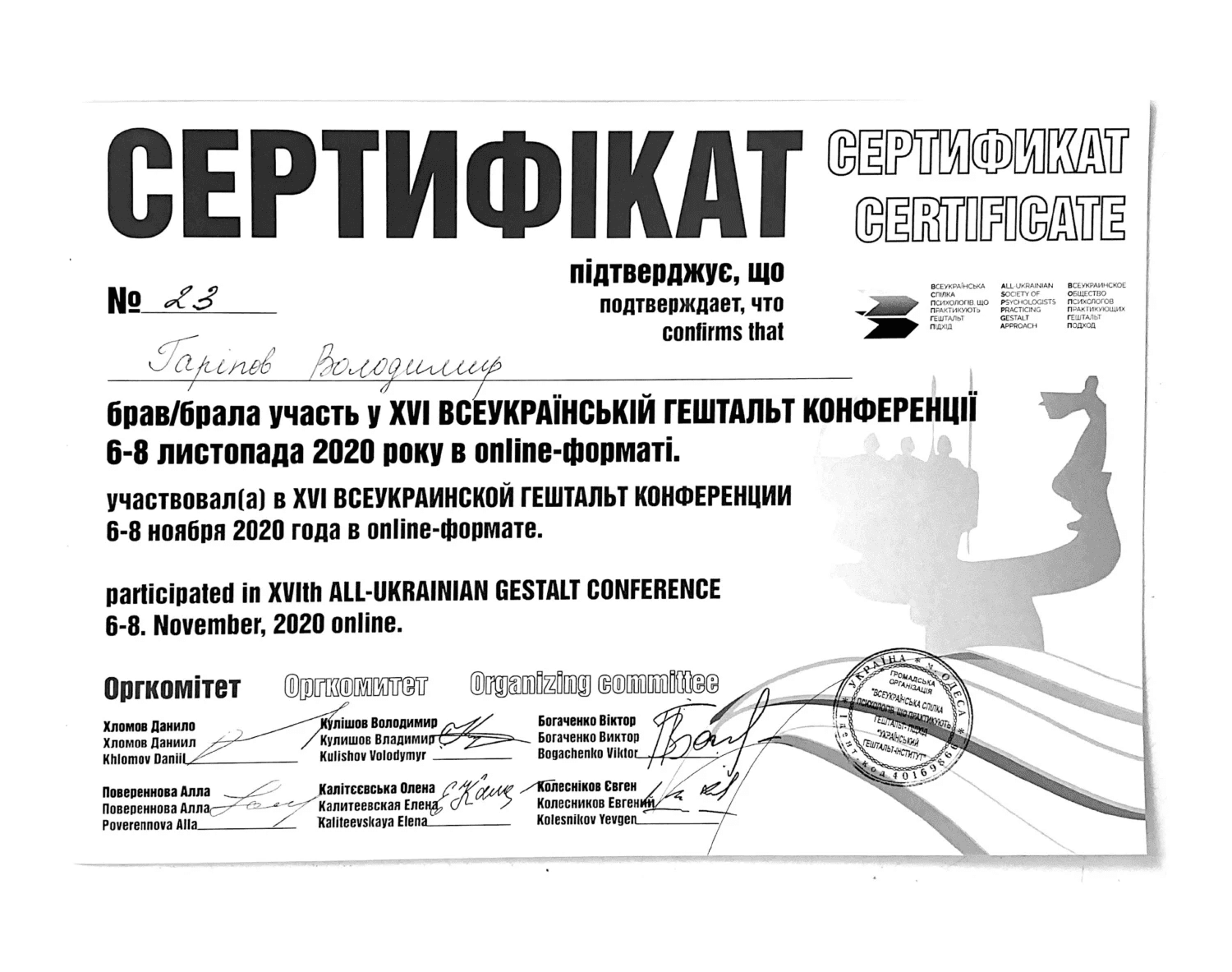
I regularly monitor the quality of my work and undergo professional development, receive supervision, and participate in international conferences and professional intensives.
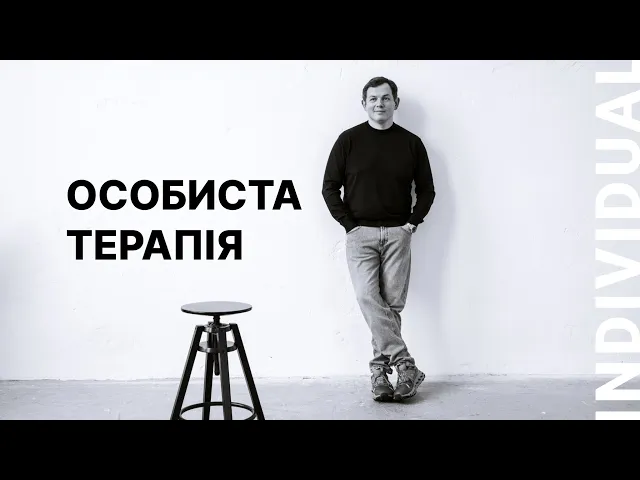
Personal therapy
The main task of psychotherapy is to develop creative adaptation skills, i.e., to independently find a solution that is right for you in specific circumstances.
To do this, you need to see the situation as comprehensively as possible and feel your own context, accept your own history, and separate past mechanisms and beliefs from current ones. Accept yourself, your needs, and your ways of living realistically. That is why I have chosen two methods for my work that complement each other perfectly: Gestalt and schema therapy.
Gestalt helps you find contact with yourself, your emotions, and your needs. Sometimes, in different situations, we lose this contact and cease to understand ourselves. The main task of Gestalt therapy is authenticity. In this method, we work on the “here and now,” that is, on what is happening to you at the moment, your reactions, and ways of adapting. Gestalt teaches awareness in everything we do, creativity in satisfying our needs, and responsibility for our own choices — this is the basis of a free and happy life.
Schema therapy is a third-wave CBT approach that works with early life experiences. We study patterns (schemas) that are formed in childhood and affect our entire lives. One of the key themes is the inner critic and the inner child. The “critic” is always dissatisfied, and the “child” cannot feel happiness. This creates pressure and devalues achievements. We learn to confront the critic, rethink negative beliefs, and unrealistic demands. Schema therapy helps us recognize our patterns, understand deep emotions, and build new behavioral strategies to free ourselves from outdated reactions and feel more happiness.
Each person is unique, so the plan of action for dealing with different problems may vary. But only by understanding the whole situation can you find the solution that is right for you.
Educational and group therapy
It is an opportunity to gain deep and broad experience in self-awareness, improving communication, and developing skills for working with people in live communication.
In my practice, I conduct group therapeutic processes and training programs for Gestalt therapists, which combine deep personal work with the acquisition of professional skills.
Unlike academic training, these programs are not focused solely on theory—the key elements are group dynamics and practical experience, which allow participants to better understand themselves, their relationships, and the processes of interaction. In the group, we learn to build conscious dialogue, recognize our feelings and needs, withstand tension and uncertainty, and explore behavioral patterns that affect our interactions with others. It is a space where you can not only learn therapeutic work, but also gain important life skills that help in any field of activity.
As a trainer, I conduct basic training programs in Gestalt therapy that meet the standards of the European Association for Gestalt Therapy (EAGT) and are accredited by the National Association of Gestalt Therapists (NAGTU). They are a mandatory part of the professional training of Gestalt therapists.
Group therapy and training programs are not just about gaining knowledge, but about changes that become part of your life.

Family therapy
Family therapy is a space where partners can hear each other on a deeper level. We work to establish genuine dialogue within the couple, where each person can openly talk about their desires and needs, understanding that their partner has the same right. It is through this process that solutions can be found that are balanced and comfortable for both partners.
In my work with couples, I use Gestalt therapy and schema therapy, just as I do in individual therapy. Gestalt helps to restore contact with one's own feelings, learn to recognize one's emotions, and express them in relationships. Schema therapy works with what exactly interferes with this dialogue — it can be early behavior patterns, fears, internal beliefs, as well as the influence of an internal critic who forms excessive expectations of oneself and one's partner. The critic can make you feel “not good enough” or, conversely, create demandingness and harshness in relationships.
Each situation is unique, so the approach to working with each couple is different. Sometimes one consultation is enough to understand what is happening in the relationship and find ways to improve communication. Much depends on how well the partners are able to talk honestly with each other, as well as on the depth of the problem and how deeply it is integrated into their interaction. In more complex cases, long-term therapy is needed to work deeply on what prevents the partners from building the relationship they really want.
A family consultation lasts between 50 and 80 minutes, depending on the format of the work (I conduct the session alone or with a co-therapist).
Over the years, I have come to realize that life always makes its own adjustments. Some changes come unexpectedly, such as war or forced emigration. Others we choose ourselves—new relationships, the birth of children, a change of profession. Some are completely natural and related to age-related stages. But even those events that we perceive as natural can turn out to be difficult. In times of change, we look for ways to restore balance and regain a sense of stability. It is important for a person to be in harmony with the world around them when their identity changes.
When I first came to a therapist, I thought I just wanted to improve my soft skills. I worked as a manager and was interested in
improving my interpersonal skills. But later it became clear that this was only a superficial explanation. In reality, I was in crisis. Outwardly, my life seemed stable and predictable. But inside, I felt empty and didn't understand how to be happy.
This experience changed me. I became more interested in how I function, what I really want (rather than what social or family beliefs tell me I should want), what truly makes me happy, and what, on the contrary, exhausts me. This interest grew—“How does the psyche work?”, “How do we adapt to change?”, “Why can’t we cope on our own sometimes?”, and “What helps us find balance?”. Over time, this interest turned into my life’s work—I trained and changed careers to start working with people in therapy.
I am now a practicing psychotherapist, supervisor, and trainer for future specialists who are also choosing this path.
In my work, I combine professional knowledge with personal experience. I understand what it means to face uncertainty, go through divorce, build new relationships, and support children in their search for themselves. I know what it means to change careers, emigrate, and adapt to a new reality. This experience helps me better understand those who come to therapy.
Our body always strives for balance—the endocrine system maintains balance in the body, the nervous system responds and adapts to stress, and the psyche has its own regulatory mechanisms. But it is not always clear how to find this balance in difficult life circumstances.
This is what we do in therapy—we find our own way of adapting, learn to understand our needs, and creatively adjust to new life challenges.